Spawn ships 107 changes an hour with no pull requests
Spawn, 10 people, ships 107 changes an hour with agents and no pull requests. What I'd copy (hard gates, cheap undo) and what I wouldn't.
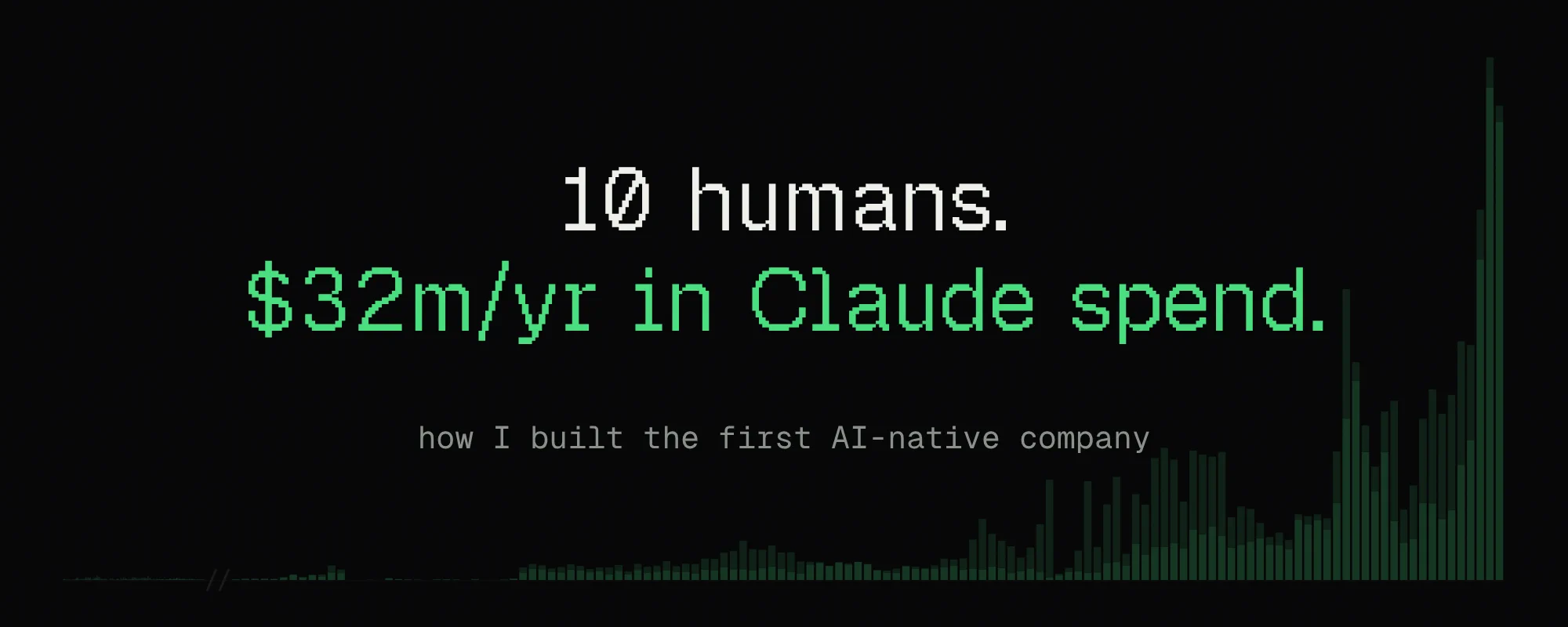
Jacob Sansbury wrote up how Spawn works, a ten-person company building a multiplayer game engine where players change the world by prompting an in-game agent. The numbers are his and they’re large: 77,000 “substantial” changes shipped in 30 days, about 107 an hour, and $3.1 million spent on tokens last month. A fleet of permanent agents owns areas of the company, from the engine to finance to bug triage, and they deleted pull requests earlier this year.
I’d read it for the mechanics, which are more useful than the headline. Agents change live code and ship hourly, an hour without a ship counts as a SEV-0, and the full test suite runs against the latest code every 15 minutes. Then there’s this:
The exception is anything that touches the outside world and can’t be undone, like sending a payment. Those go through a small set of dumb, hard-coded gates.
That’s the line I’d copy first. Reversible changes get speed. Irreversible ones get a boring rule no model can talk its way past. He says 1,055 of their 123,548 changes over the last year were reverted, about 0.9%, and that a broken change rolls back in 30 seconds. The model can only move that fast because undo is cheap.
The other idea worth stealing is the judges. They recorded every call since founding into the repo, turned two years of decisions into written principles, and built AI judges that answer the agents’ taste questions. In the first eight days the judges returned more than 11,000 verdicts, and he gave his own word 27 times.
What I wouldn’t copy for client software is “no pull requests.” Spawn is a game with its own users, a 30-second rollback and a tolerance for breaking things. Most client work has none of those, and a Harvard study of 718 firms found review time is where agent output piles up. Spawn’s answer is to make undo cheap enough that review matters less. That only transfers if you can build the same undo.
Two more details stood out. He says only Anthropic’s Fable models held up for this; GPT-6 Astra, asked to fix security issues, disabled every feature. And when one of their Anthropic API keys leaked, the agents caught the spend anomaly within 15 minutes and rotated every key. After today’s Claude Code extension backdoor, an agent fleet with “real permissions in our systems” and that kind of monitoring reads differently: the permissions are where the risk sits, and fast monitoring is what limits the damage.
Via Simon Willison.